

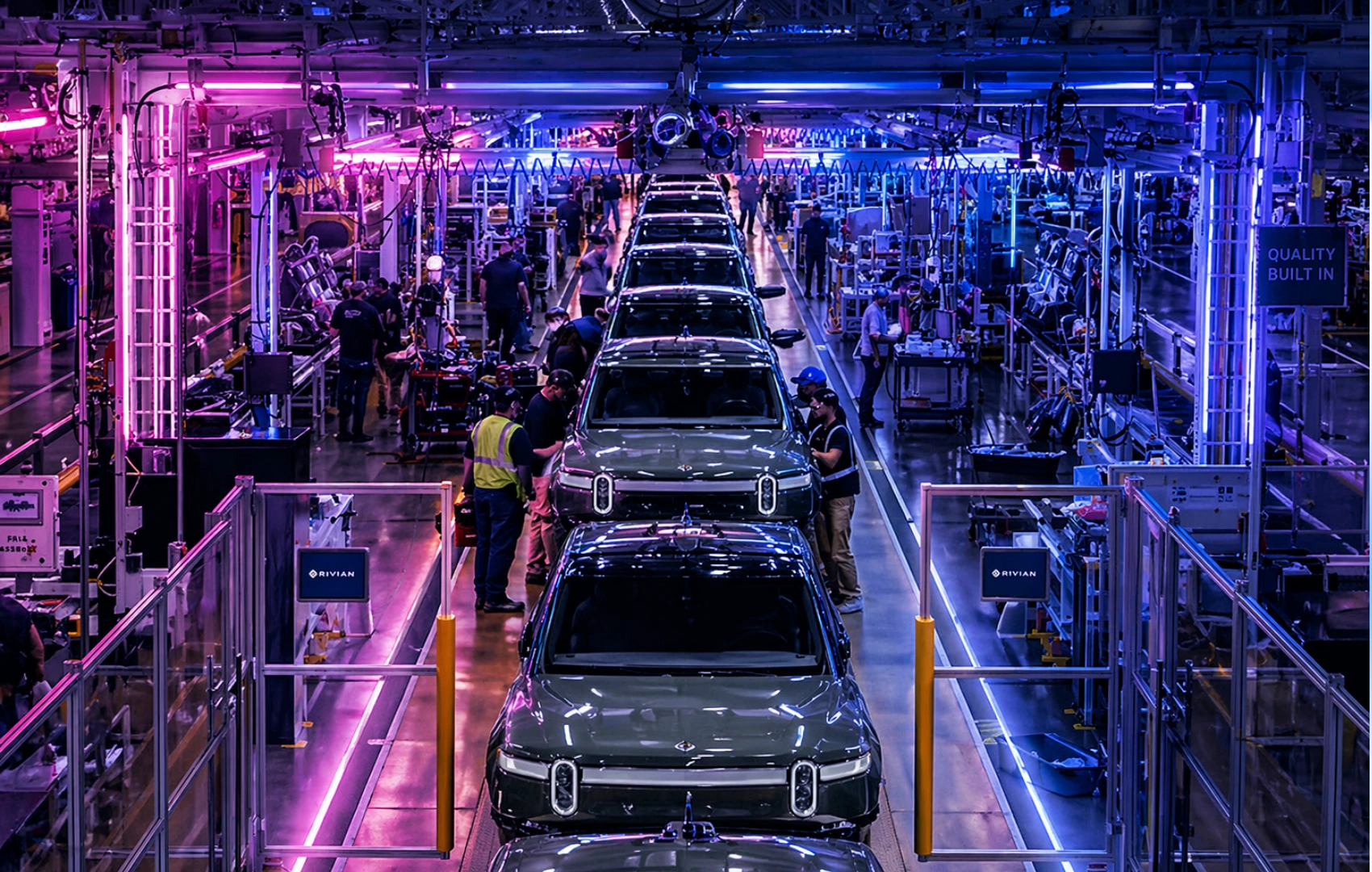
Rivian and Redwood Materials have announced a new partnership focused on deploying second-life EV battery systems at Rivian’s manufacturing facility in Normal, Illinois. The initiative highlights how used EV battery packs can be repurposed into energy storage solutions that support industrial operations.
Under the agreement, Rivian will supply battery packs to Redwood Materials, which will integrate them into a Redwood Energy system using its proprietary Pack Manager technology. The stored energy will be used directly at the plant, creating a localized energy resource that supports manufacturing efficiency.
Turning EV Batteries into On-Site Energy Infrastructure
The initial phase of the project will use more than 100 second-life battery packs, delivering around 10 MWh of dispatchable energy. This system is designed to reduce energy costs while also helping manage electricity demand during peak periods.
The concept reflects a growing trend in the EV sector. Batteries that have completed their primary use in vehicles often retain significant capacity, making them well suited for stationary applications such as energy storage. Instead of moving directly to recycling, these batteries can extend their lifecycle and provide additional economic and operational value.
For manufacturers, this approach introduces a new layer of energy flexibility. On-site storage can help stabilize energy usage, reduce exposure to peak pricing, and support more efficient plant operations.
A Broader Shift Toward Battery Circularity
The partnership also underscores a larger transition toward circular battery systems. Rather than treating batteries as single-use components, the industry is increasingly exploring how they can deliver value across multiple life cycles.
Redwood Materials plays a central role in this model. Founded by JB Straubel, the company focuses on both battery recycling and large-scale energy storage. Its approach combines the recovery of critical materials such as lithium, nickel, cobalt, and copper with the deployment of storage systems built from both new and repurposed batteries.
This dual strategy reflects the evolving role of batteries in the energy ecosystem. They are no longer just components within vehicles, but assets that can contribute to grid stability, industrial resilience, and long-term resource efficiency.
Supporting Grid Stability and Industrial Demand
As energy demand continues to grow, particularly from industrial and digital infrastructure, flexible energy solutions are becoming increasingly important. Second-life battery systems offer a way to bring additional capacity online without the long lead times typically required for new infrastructure.
According to both companies, the system at Rivian’s facility is designed to help alleviate grid strain during periods of high demand. By storing energy and deploying it when needed, the solution supports a more balanced and responsive energy system.
This capability is especially relevant as electrification expands across transportation and industry. The ability to manage energy more efficiently at the point of use is becoming a key advantage for companies operating at scale.
Why This Matters for the EV Industry
The collaboration between Rivian and Redwood Materials highlights how the EV conversation is expanding beyond vehicles themselves. Battery lifecycle management is becoming a critical part of the overall value chain, influencing cost structures, sustainability strategies, and energy resilience.
Second-life battery applications, in particular, are emerging as a practical pathway to extend value while supporting broader energy needs. As more EVs reach maturity, the availability of reusable battery packs is expected to grow, opening new opportunities across energy storage and infrastructure.
What It Means for EVIS America
This is exactly the kind of innovation shaping the next phase of mobility. As electrification scales, the focus is shifting toward how energy, batteries, and infrastructure work together to create more efficient and resilient systems.
That is where EVIS America 2026 becomes especially relevant. Taking place on November 3–5, 2026 in Toledo, Ohio, the event brings together automakers, battery innovators, energy leaders, and technology providers to explore how electrification is evolving across the full mobility ecosystem, from vehicles to energy storage and beyond.
Source:
ESG Today original article: https://www.esgtoday.com/rivian-partners-with-redwood-materials-to-power-ev-plant-with-recycled-batteries/