



Rising Gas Prices Reinforce the Cost Advantage of Electric Vehicles
New analysis from the Electric Power Research Institute highlights a clear trend: rising and volatile gasoline prices are strengthening the economic case for electric vehicles.
Fuel costs remain one of the most significant factors in vehicle ownership. As gasoline prices fluctuate, they directly impact operating expenses, prompting renewed comparisons between electric vehicles and traditional internal combustion engine vehicles.
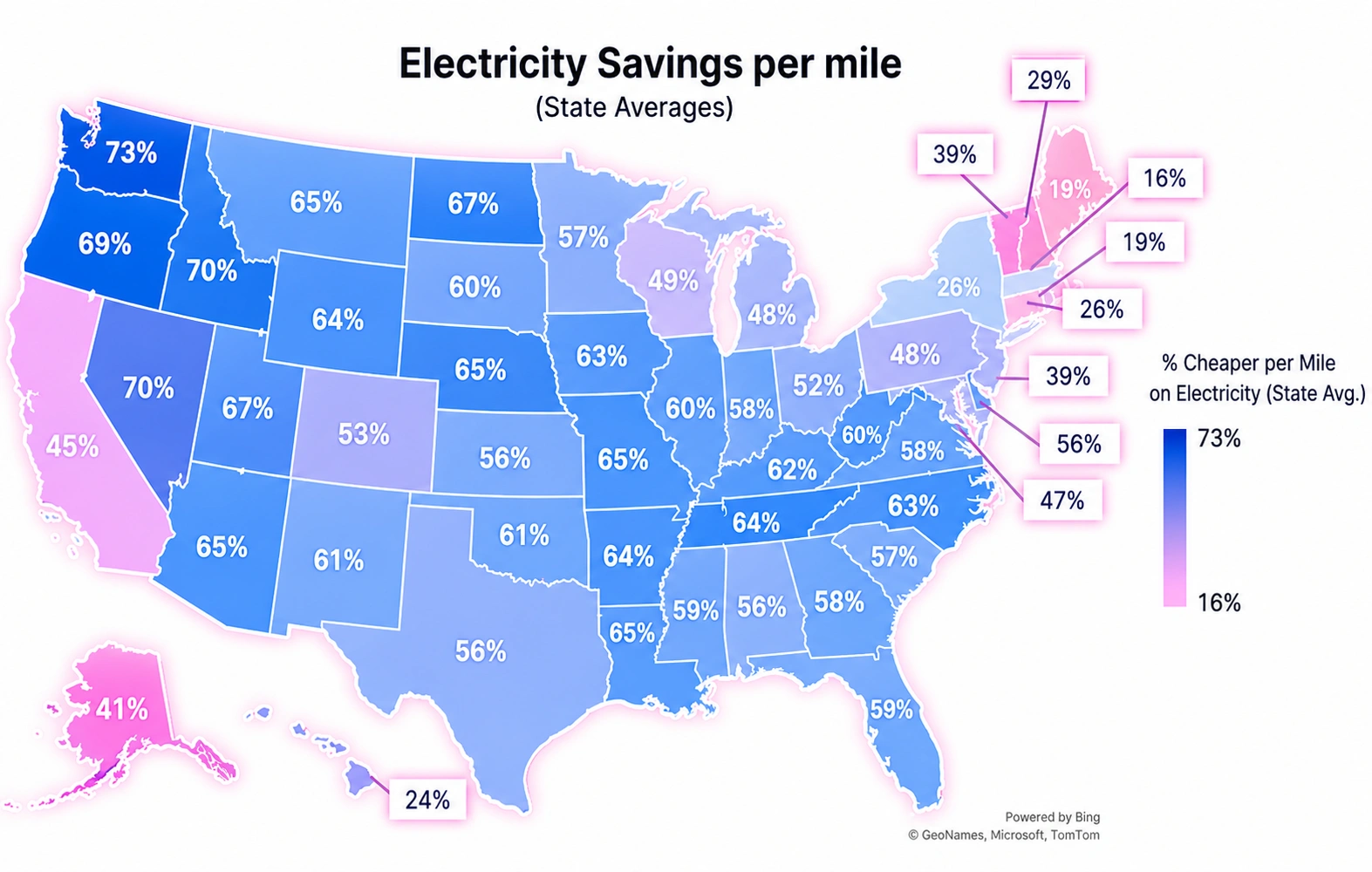
According to the findings, EVs consistently deliver a lower cost per mile across most regions, giving drivers a measurable financial advantage over time.
Cost Per Mile Becomes a Key Decision Factor
The analysis shows that EV drivers benefit from a nationwide fuel cost advantage, driven by differences between electricity rates and gasoline prices. In many states, this creates what researchers describe as an “energy discount” for EVs.
Regions with higher gasoline prices and relatively lower electricity costs see the most significant savings. However, even in areas with higher electricity rates, EVs still maintain a cost advantage when fuel prices are elevated.
This reinforces a key shift in the market. Vehicle choice is increasingly influenced not just by upfront cost, but by long-term operating efficiency and predictability.
Electricity Offers Greater Price Stability
Another important factor is energy price stability. Unlike gasoline, which can be affected by global supply dynamics and market volatility, electricity prices tend to be more stable over time.
This stability allows EV drivers to better predict their long-term operating costs, reducing exposure to sudden price spikes. For both individual consumers and fleet operators, this predictability is becoming a significant advantage.
As energy markets continue to fluctuate, this distinction is likely to play a larger role in purchasing decisions.
Commercial Vehicles Show Even Greater Savings Potential
The cost advantage extends beyond passenger vehicles. The analysis indicates that medium- and heavy-duty electric vehicles can achieve fuel cost savings ranging from 35% to 82% compared to gasoline or diesel alternatives.
This has important implications for fleet operators. As operating costs are a primary concern in commercial transport, electrification presents an opportunity to improve efficiency while reducing long-term expenses.
The findings support a broader industry trend where fleet electrification is accelerating as both a financial and operational decision.
Regional Differences Shape the Opportunity
The extent of EV cost savings varies by location, influenced by local gasoline prices, electricity rates, and tax structures. States in regions such as the Pacific Northwest demonstrate some of the highest savings levels due to favorable energy pricing conditions.
This highlights the importance of localized energy economics in shaping EV adoption. While the overall trend is consistent, regional dynamics continue to influence how quickly electrification progresses.
Why This Matters for the EV Industry
The broader takeaway is that rising fuel costs are not just a short-term factor. They are reinforcing the long-term economic case for electric vehicles.
As consumers and businesses evaluate total cost of ownership, EVs are increasingly positioned as a financially competitive option. This shift is likely to accelerate adoption, particularly in segments where operating costs are a critical consideration.
The analysis also underscores how energy markets and mobility are becoming more closely connected, with cost dynamics playing a central role in the transition.
What It Means for EVIS America
This is exactly the type of market insight shaping the next phase of mobility. As electrification scales, the focus is shifting toward real-world economics, energy efficiency, and long-term cost advantages.
That is where EVIS America 2026 becomes especially relevant. Taking place on November 3–5, 2026 in Toledo, Ohio, the event brings together automakers, energy leaders, fleet operators, and technology providers to explore how electrification is being driven by both innovation and economics.